
Film Wedding Photography: Not Worth the Hype in 2026
Film Wedding Photographer Luxury Pricing Explained: How to Avoid Overpaying for the Film Trend Wedding Tax
If you've been planning your wedding for more than a minute, you have no doubt come across film wedding photographer this, film wedding photography that, and dreamy, timeless analog aesthetics all over TikTok, Instagram ads, and the YouTube. Each one performing the same bit to convince you to spend an extra $1,200 on two rolls of film. And because I've been taking pictures on film for a long-ass time — since 2003, when I was 15 — I have seen every single modern wedding photography trend come and go faster than McDonald's rolls out, then kills, the McRib.
And this latest wave — the performative film wedding photographer aggressively shoving analog vibes down your throat on TikTok — is just the latest version of taking a once-standard service, repackaging it with new keywords, and selling it back to you as a premium luxury add-on: the classic wedding tax. Now, to be fair, I'm not calling film wedding photography a straight-up scam, far from it. I'm a film wedding photographer in Los Angeles after all. Nor am I saying all film wedding photographers are performative. However! As with most industries, it's always the loud shills who rise to the top — the ones who jump on the bandwagon and overhype the shit out of whatever the thing is. In our case, film wedding photography.
Objectively, film wedding photography is absolutely worth paying a little extra for when it's done intentionally — but don't pay a premium just because someone uses the word film. Film wedding photography really is timeless and beautiful. But a lot of what is currently being marketed as film wedding photography is social media clout, aggressive scarcity marketing, and luxury positioning designed to increase package prices. The hype is the issue here. Some photographers are using film as a luxury buzzword, making it sound rare or magical to justify a large markup. So don't confuse nostalgia with quality. Because a photographer with a film camera is not automatically better, and a digital photographer isn't automatically less artistic. And to understand how we got here, let's go back to the year 2000.
Film Wedding Photography was the Industry Standard
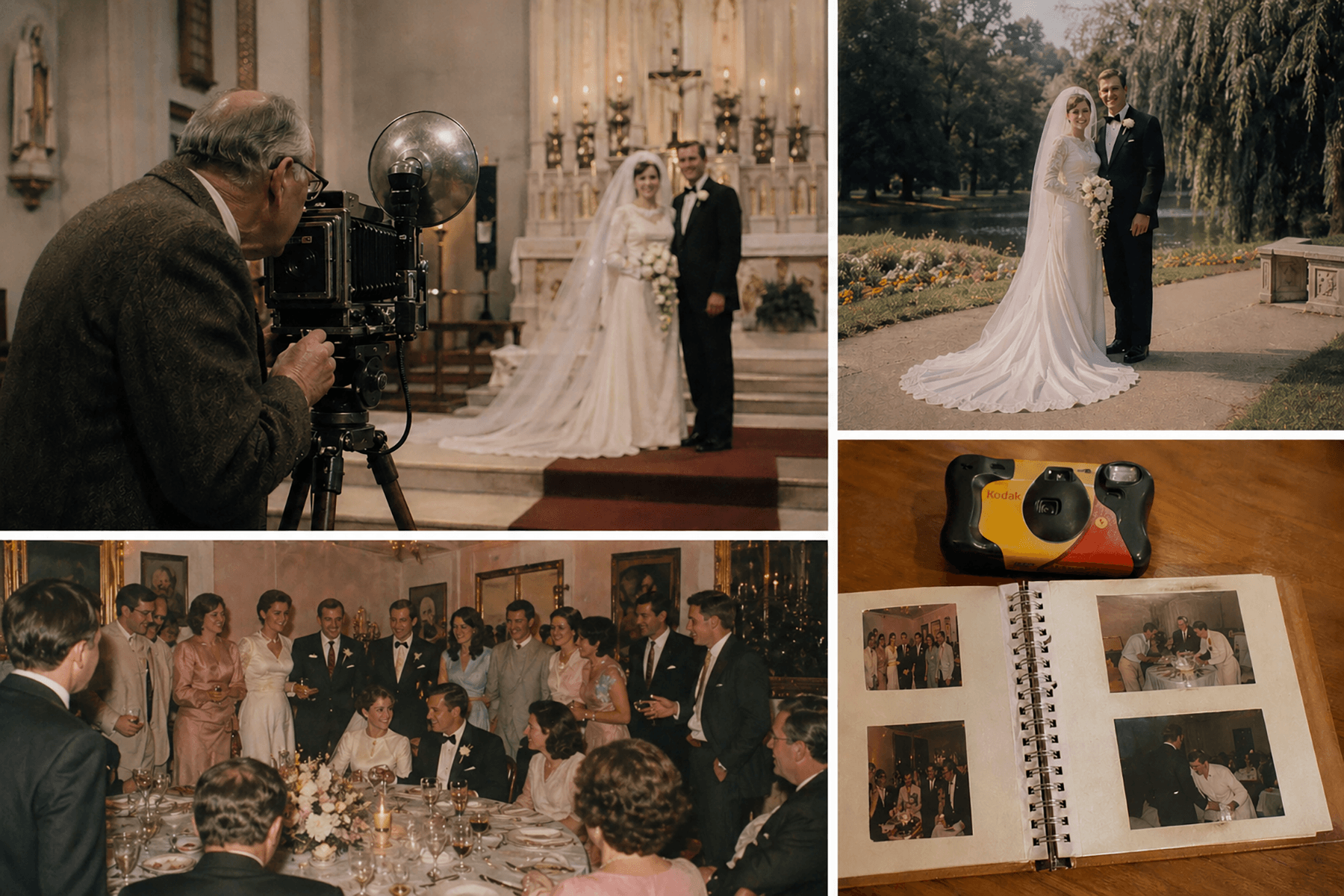
All weddings up until the year 2000 were photographed on entirely film. Not as an aesthetic choice, but because it was the only option. Your grandparents' wedding, your parents' wedding — all film. And sometimes only one picture from said wedding exists, because what we call wedding photography today — the getting ready, the first look, the romantic golden-hour portraits, the online gallery of 5,000 pictures — wasn't a thing. Wedding pictures in the film era meant an old-timer with a big-ass camera took a group picture at church, maybe a one outside, and that was it. Assuming you even had a photographer, because most families just took pictures of the newlyweds with a disposable camera in their parents' living room and called it a day.
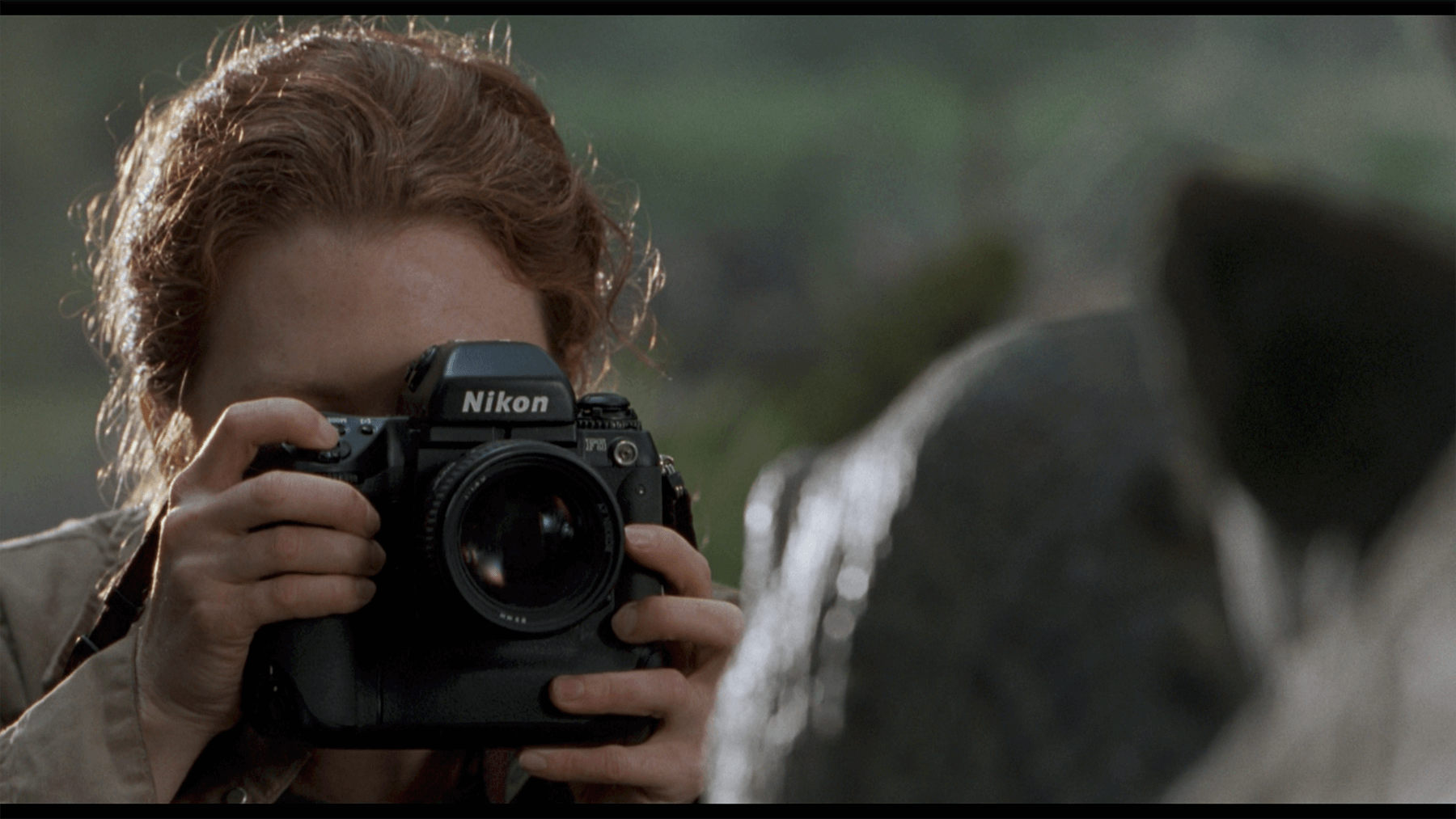
It wasn't until the mid-2000s, when digital cameras became affordable and practical enough to take hundreds of pictures, that the modern wedding photographer was born. They then offered mostly, if not completely, digital wedding coverage as film quickly became obsolete industry-wide. So much so that when I worked at several camera shops around this time, you couldn't even give these film cameras away. Every week, we had a client or two drop off a box of "obsolete" film cameras. And I'm talking about film cameras like a Nikon F3, F4, even medium-format cameras like Hasselblads and the Contax 645.
Until an unexpected film revival in 2010, driven by Hipstamatic and Instagram, whose retro filters quickly gained mainstream traction. And with that came the first crop of celebrity (modern-day influencer) film wedding photographers. And it seemed like film was here to stay. But by 2015, film became a quiet niche again, and by 2021, it seemed like film was finally done for. Nikon discontinued the F6, Fujifilm 86'd its entire film portfolio, and if you were lucky to find Kodak film on store shelves, the prices were sky-high. So for a brief moment it seemed like the film days were finally numbered. But then...
TikTok Created the Performative Film Wedding Photographer
In 2021, practically every hobby and niche became a 24-hour sensation on social media. Prices of everything from Y2K digicams to Pokémon cards went through the roof. People went crazy buying every bit of nostalgia they could get their hands on, no matter the cost. In the photography space, every random film camera a YouTuber/TikToker "discovered" was pawned off as if it were a recent Jordan drop, flooding the wedding industry with photographers who paid $5k for a shitbox of a film camera.
And because many of these people had never used a film camera before, the pictures they took with them were crooked, underexposed, with harsh direct-flash, and treated like fine art because of course, they were taken with a "five thousand dollar" film camera. It didn't help that these objectively bad pictures were then heavily featured in The New York Times and The Knot while praising this lack of craftsmanship. And since film wedding photography hadn't been mainstream since 2014, no one really complained it because, of course, it was the industry darlings who were taking these underexposed pictures.
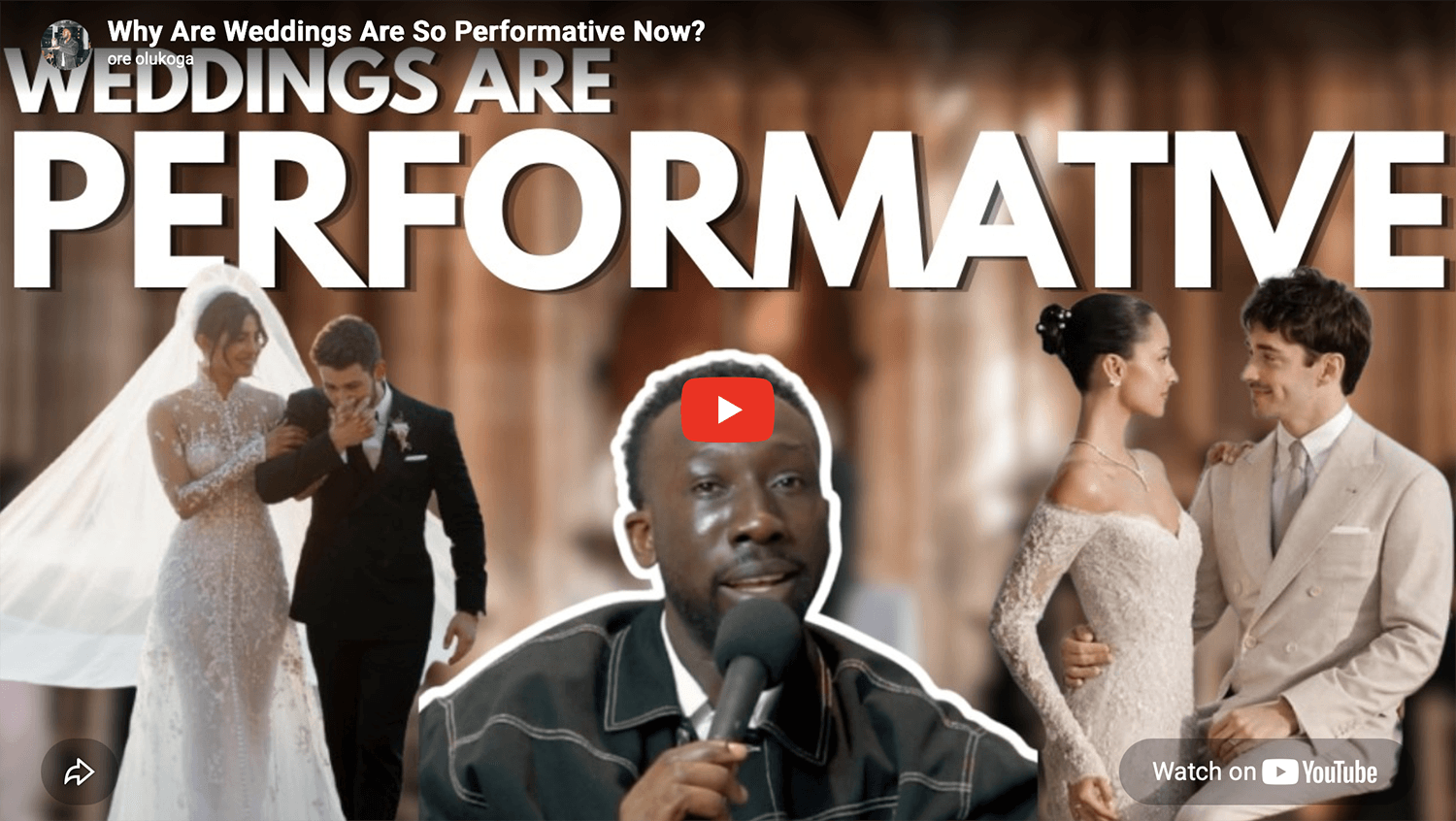
Bringing us to the current state of performative film wedding photographers offering the same underexposed aesthetic as a callback to nostalgia — a cash grab on your childhood. Turning an accessible format into an overhyped luxury status symbol with lowered craftsmanship, while simultaneously creating a false sense that film is inherently premium and exclusive. And you could argue that these photographers were simply responding to market conditions — after all, the Contax 645 nobody wanted in 2008 was suddenly $6–7k in 2021, and film that was $5 a roll was now $25. But that excuse only goes so far when choosing to peddle half-assed film to clients, positioned as a premium experience — the very film some of these photographers had never taken seriously before. The inflated costs didn't make them do that. The opportunity did.
Film Wedding Photography Pricing: Add-ons and Hybrid Coverage Red Flags
Unfortunately, in 2026, many wedding photographers market themselves as film wedding photographers more aggressively than their actual film usage would suggest. Over-representing their Instagram and TikTok grids with nothing but film pictures from the one roll they used at a client's wedding, when in reality, the wedding was photographed digitally and then batch-processed through Ai to make it look like film. All while posting endless POV videos showing off their quirky film cameras.
Making it difficult for you, as a client, to separate the ones who use film for clout from the ones who photograph an entire wedding on film. But I can at least arm you with a handful of pricing examples of what you'll encounter in the wild that exemplify what I'm calling out.
Now, for obvious reasons, I'm not gonna say who these photographers are, but they're not hard to find after a quick Google search. Besides, their pricing structures are so interchangeable and practically industry-wide anyway, that it could even be the photographer you're interviewing right now. And keep in mind that each one of these photographers, in their own marketing say they are bona fide film wedding photographers, like me. Meaning, film is incredible. It's why I've been using it since 2003. But the camera, the price tag, and the word "film" alone do not and should not justify charging you, the client, luxury prices for what was once a standard service.
-
This photographer mentions they've spent the last two years slowly incorporating film into their weddings. Nothing wrong with learning. Everyone starts somewhere. But when film packages are being sold as a premium add-on, experience matters.
When asked what happens if a film photo doesn't come out, the answer was: when shooting add-on film packages, I'm shooting hybrid, film and digital.
Meaning: Digital is still the safety net and film is the aesthetic bonus for an extra $250 per roll.
-
Starting price: $8,600 and film is not included.
Want film? That's an additional:
$1,200 for two rolls of film
$2,500 for five rolls of film
The catch? You don't find out until after an hour-long discovery call, when you've already been sold on the film photographer branding. The pricing page then clarifies, "we shoot film alongside digital so you get both."
Meaning: Digital is the primary coverage. Film is the upsell, the garnish, not the main course. You end up paying $11,000 for the same picture of your dress hanging on a tree twice — one on film, one on digital.
-
By far the most expensive option:
Higher-end packages where you receive more film coverage.
But most moments are still photographed digitally and on film.
The result?
The same pictures delivered twice in different formats.
Film photos that look nearly identical to digital.
Or, at worst, underexposed images that rely more on film vibes than actual craftsmanship.
-
The most common pricing:
$150 to even $500 per roll of film
No clear explanation of how many usable images you'll actually receive
This option is by far the one you need to stay as far as away from because! This is the biggest red flag in showing a photographer is in it for internet clout and not the craft of analog photography.
-
One thing to watch out for in any photographer's marketing, is expensive gear being used as proof of expertise. A Hasselblad, a Contax 645, or a Leica, does not automatically mean better results. Some photographers openly admit that manual focus is something they struggle with on hectic wedding days. Manual focus is hard. Film is hard. But bringing a complicated and expensive camera system to a wedding while still learning it raises a fair question: Are you paying for experience — or for the aesthetic of the film camera?
The One Question Most "Film Wedding Photographers" Fear
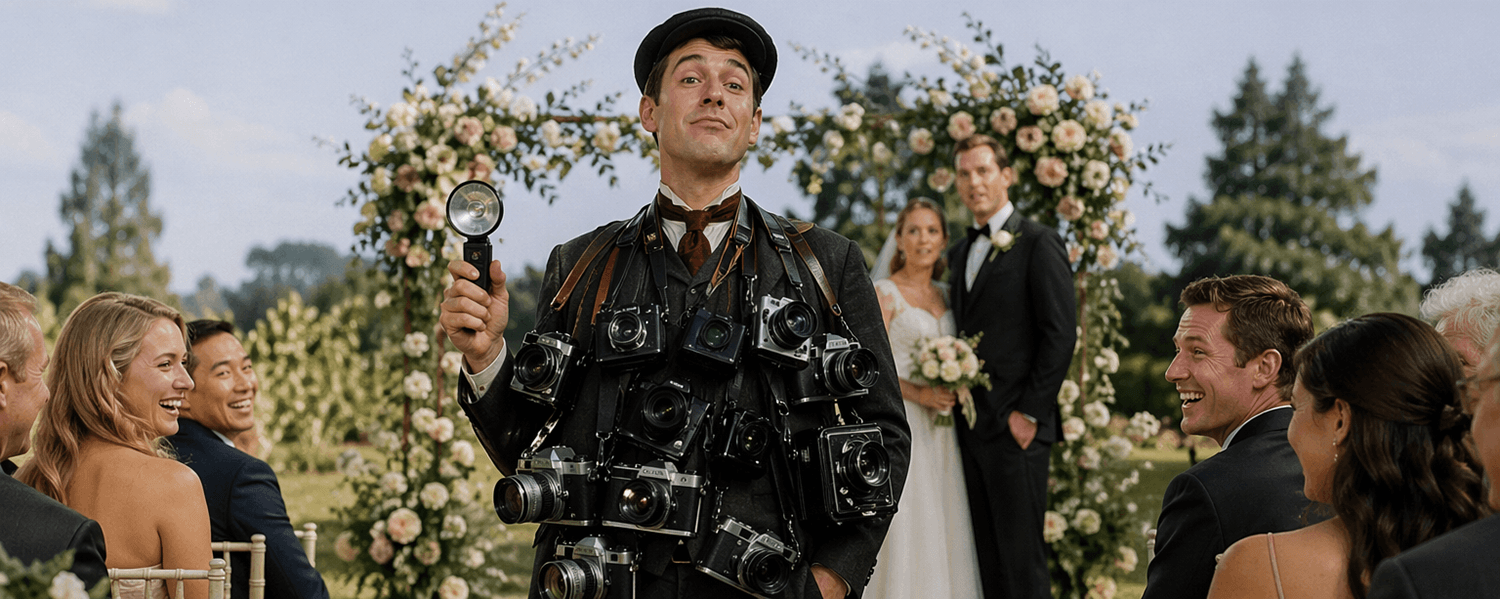
Now look, I'm a random drunk on the internet, so who the hell am I to be telling you how much you should pay for a film wedding photographer in 2026. You wanna pay $8,600? $15,000? I don't have a problem with that. What I'm exposing here is the comical price tag of a garnish attached to the theatrical performance behind the film aesthetic. The endless, breathless website copy and videos about how much my fellow photographers love film. How they grew up with it. How the grain is dreamy. How the unpredictability is beautiful. How the imperfection is intentional. How film keeps them creative and in the moment. How it slows them down. Romantic nostalgia slop designed to make incompetence sound like a philosophy. Then showing up to your wedding with ten cameras around their neck looking like Bert from Mary Poppins.
No one is stupid enough to turn in a polished essay on heavy stock paper with the last paragraph scribbled on a bar napkin. So why let a photographer you're paying thousands of dollars do the same on your wedding day? Because when you strip away the romantic and aesthetic keywords these performative photographers use in their marketing, what you're being sold is someone who cannot guarantee a single frame on the medium they're half-assing while charging an extra $1,200 for. And they're straight-up telling you this — they just hope you don't notice it under all the algorithm heavy buzzwords. Because film is not unpredictable when you know what you're doing. Film is not a cute little adventure in imperfection. Film is a medium with set rules, and if you know the rules, you get the picture every single time. And the whole "unpredictability is part of the charm" thing? That's not a philosophy. It's a disclaimer.
What I hope you take away from all this, is that not every film add-on is a scam — but that you know how to detect one. Hire a photographer who actually knows the medium, not someone selling the aesthetic of knowing the medium.
So if a so-called film wedding photographer bombards you with vision-board energy, then slides you a comically priced menu of additional film add-ons, ask them one simple question: Can you shoot half of my wedding entirely on film? No digital backups. No hybrid safety net. Just film. If they give you a long, flowery excuse about how the hybrid approach gives you multiple experiences, different aesthetics, and how they want to make sure every moment is captured — swipe left. Because what they're really telling you is that they don't trust themselves with the medium they just tried to finesse you with. And if they don't trust it, you definitely shouldn't be paying extra for it. At which point you're honestly better off using disposable cameras to scratch the analog itch — and spending the money you saved on more alcohol. But if they do call your bluff, brace yourself for an even more comical price tag.







A simple guide to planning a civil wedding ceremony in Beverly Hills.