
A Fifteen-Year Long-Term Review of the Nikon F3
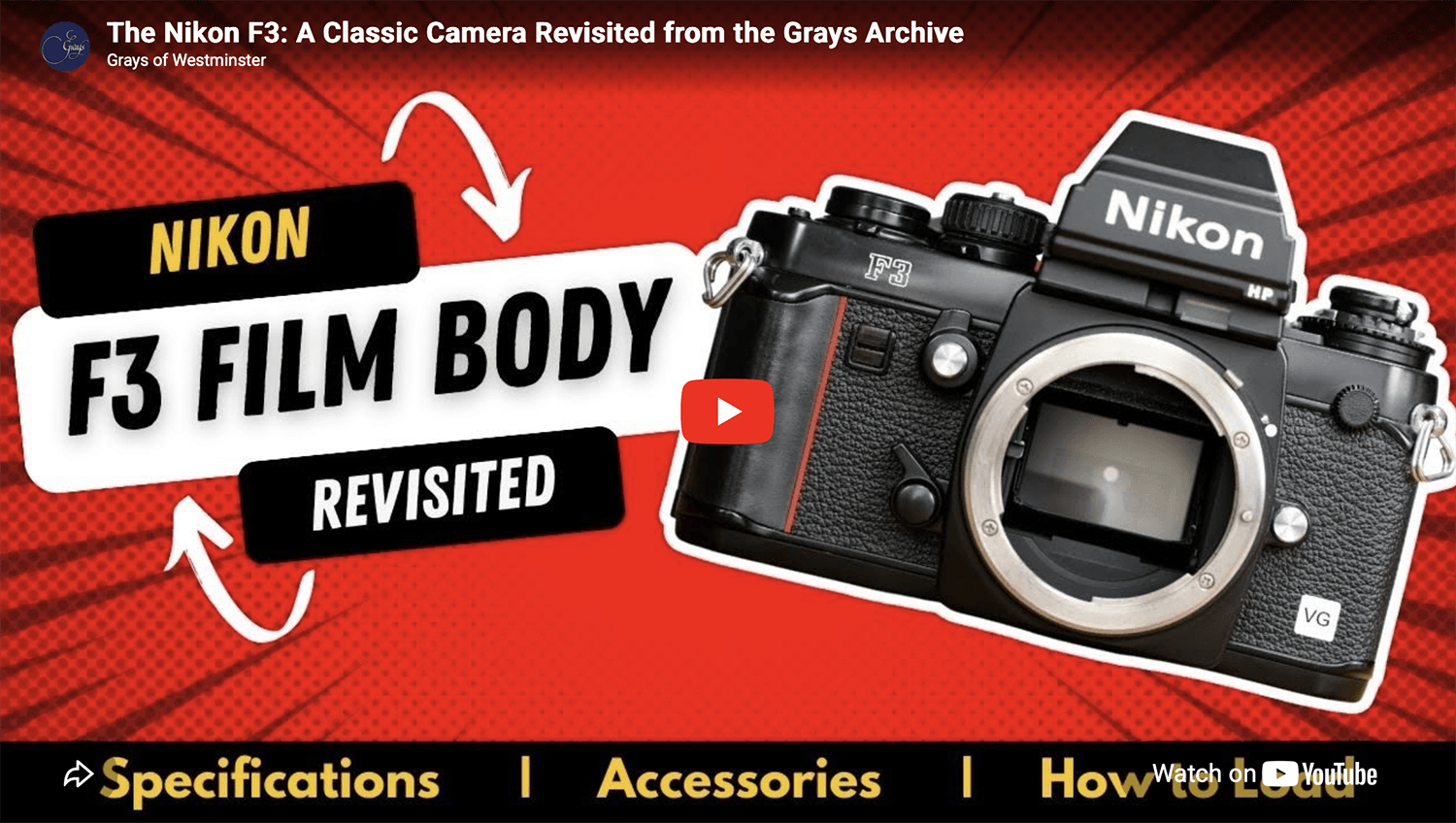
The Nikon F3 is undeniably one of, if not the most sought-after film camera ever created by Nikon. Having stood the test of time, proven by its durability long after its production ceased in 2001. Designed by Giorgetto Giugiaro and introduced in 1980, the F3 marked a bold shift in Nikon's approach: sleek, modern, electronic, yet rugged enough to survive war zones and studio floors alike. It served photojournalists, and fashion photographers alike with quiet confidence for over two decades. And as a proud owner of three Nikon F3s over 15 years, I can say without hesitation the F3 is the best 35mm film camera ever made.
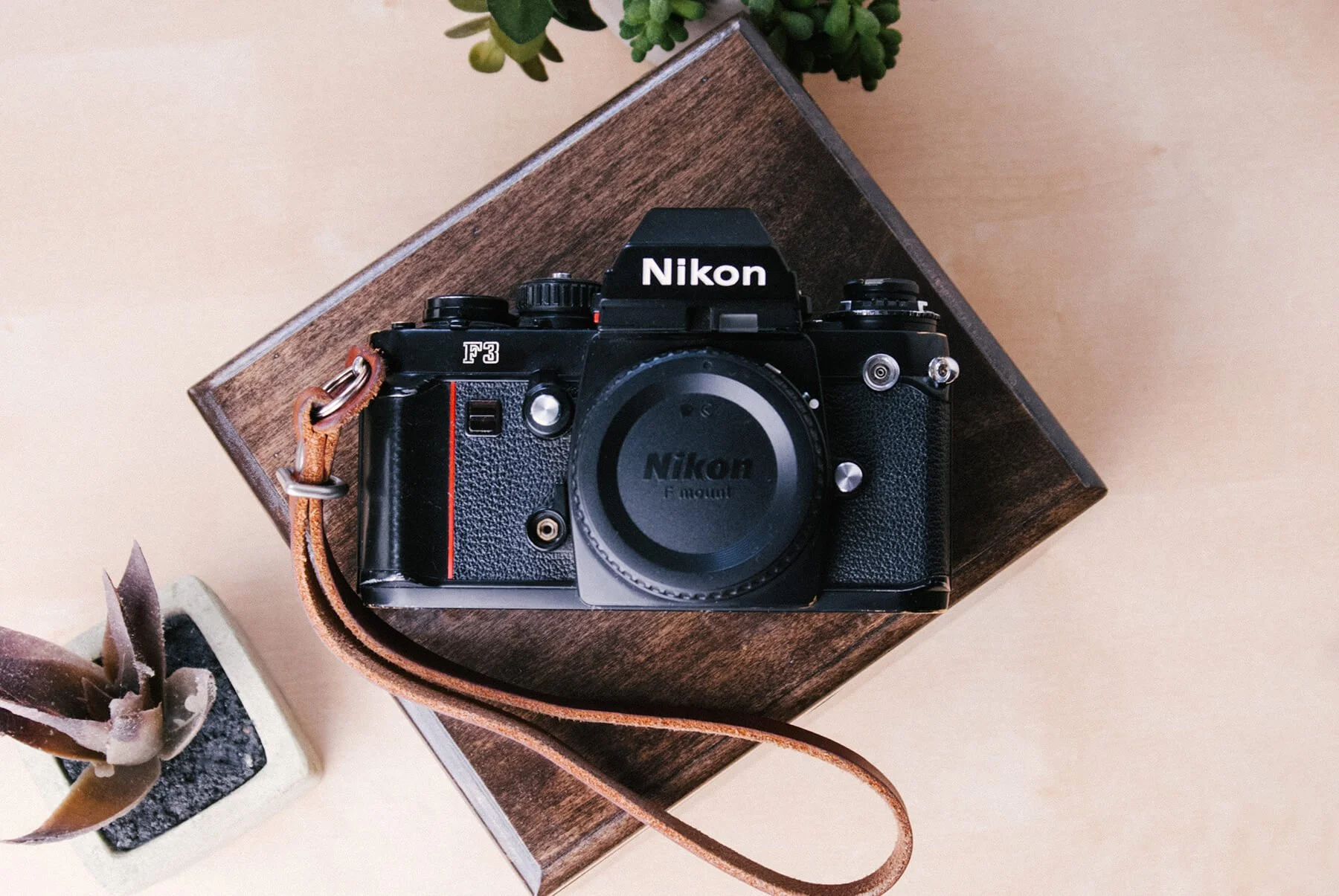
A Decade-and-a-Half with the Nikon F3
I acquired my first F3 paired with a Nikkor 50mm f/1.4 Ai-S in 2008, while working at a local camera store in Los Angeles. A frequent customer left it claiming it didn't work. My co-worker grabbed it — it was my day off — but I offered five bucks for it the following day, popped in a new battery, and it fired right up. And he only sold it thinking it was actually bricked. Now, if you weren't into photography then, you missed out on a wild era when people were literally throwing film cameras in the trash — you couldn't even give them away most of the time. And customers would leave boxes behind filled with so-called junk gear a few times a month. And I'm talking about film cameras that are worth hundreds today.
This Summer Imperfect
At the time, the Nikon D200 was my everyday camera, with the Nikon F5 as my main camera for film wedding photography. So the F3 sat in my Domke bag untouched until 2012, when film made an unexpected comeback in the wedding industry, a great time to be into analog photography, as the prices of both film and gear were very reasonable. Don't forget, five years earlier, it was all considered junk. But the catalyst for dusting off the F3 was the book Film Is Not Dead, which pushed me to embrace manual mode, manual focus, and to photograph my neighborhoods as world-class destinations through the cameras I already had. And so the F3 went everywhere with me, shaping how I saw light, composition, and overlooked corners of Los Angeles, Oaxaca, and Tijuana. But more importantly, it made the mundane worth photographing. And because I loved almost every photo it gave me, I started this blog just to show off the pictures, well before Instagram took over our lives.
I Don't Like Sand, It Gets Everywhere
Sadly, in 2018, a local camera repair shop "lost" my F3 when I brought it in for cleaning after some sand got in it during its first and only trip to the beach. After a heated back-and-forth, homie agreed to replace it — but handed me a different F3 with a dented viewfinder and a 50mm f/1.4 Ai lens. Sure, technically it was an F3, but it wasn't MY F3. It didn't have the pristine red-dot Type D focusing screen or the mint DE-2 viewfinder mine had. It was like losing your first car — you don't miss the specs, you miss the memories. So I sold it not long after. In 2022, I picked up a mint F3 HP, but again, it just didn't feel right, so I sold it too. These days, the Nikon F6 and the Nikon N75 fill the space the F3 left behind. Sometimes you just have to move on.
Nikon F3 Sample Photos
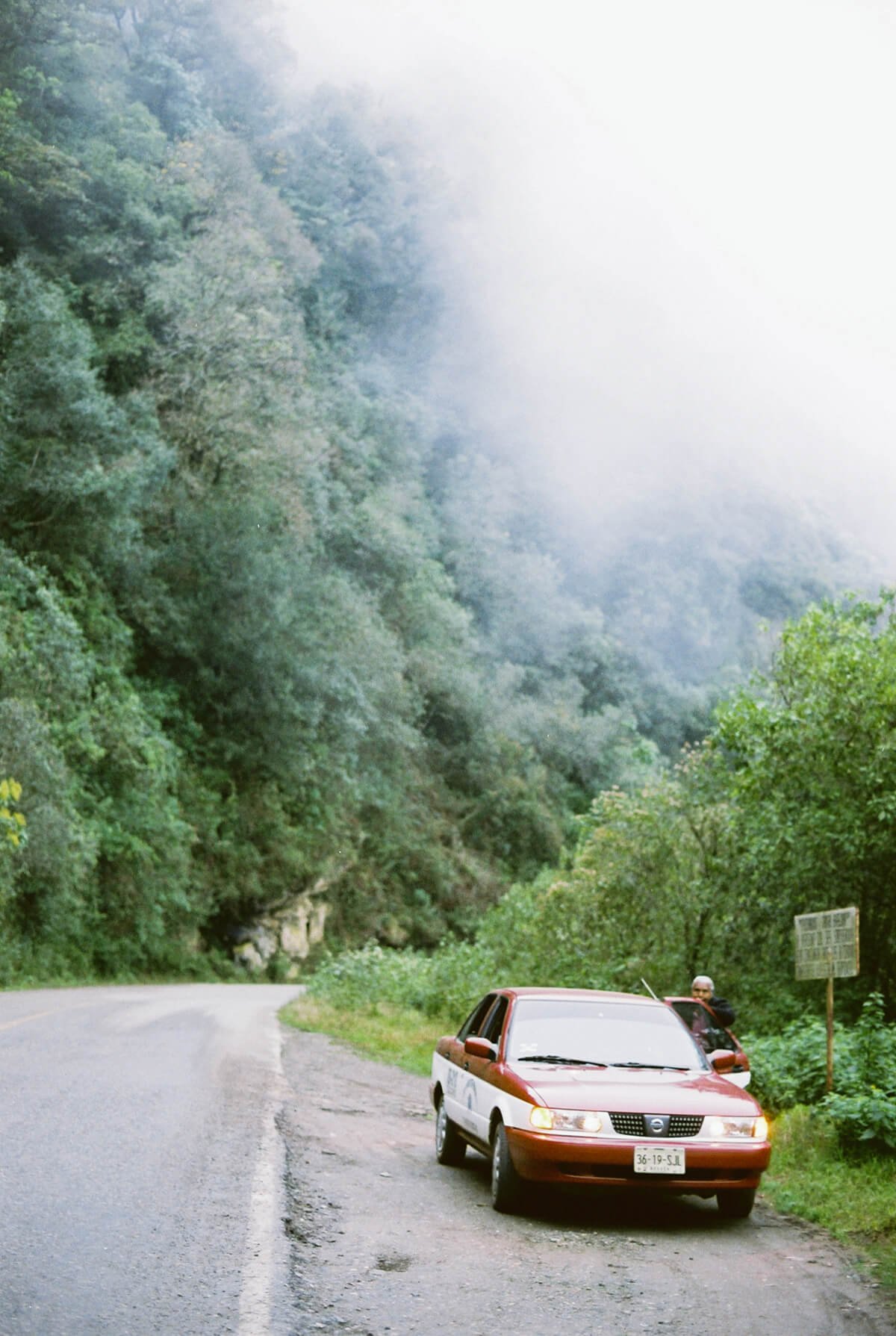
Taken with the Nikkor 50mm f/1.4 Ai-S in Oaxaca on Day of the Dead











Four Reasons Why the Nikon F3 is the GOAT
Nikon knocked it out of the park designing a near-perfect precision instrument that outlived both the F4 and F5 in terms of production. Was it because of the materials they chose to use? Or maybe the unrivaled collaboration with Giorgetto Giugiaro, who handled the timeless design, and Yasuo Kashiwa, who oversaw engineering and mechanics. Who knows? But what I do know is that a camera like the F3 will never be made again. But that's okay, because there are plenty in circulation anyway. So, if you're thinking of getting one, here are my four reasons why I believe the F3 really is the best 35mm film camera of all time.
Exquisite Craftsmanship and Minimalist Design
Proudly made in Japan, the F3 exhibits unparalleled craftsmanship for its era, featuring a rugged metal construction that develops a beautiful patina over time — a testament to Nikon's dedication to quality. The F3 exemplifies minimalism. Every feature serves a purpose and never gets in the way of the creative process. Apart from learning how to manually focus, there is no steep learning curve associated with the F3.
Compact, Travel-Friendly and a Superb User Experience
Both the F3 and accompanying Ai-S lenses are relatively small compared to DSLRs and bulky mirrorless setups, making the F3 the perfect companion for travel. All while providing a delightful user experience with its bright and very large viewfinder, solid film advance lever, commanding shutter dial, and satisfying mechanical sounds, instilling confidence with every shutter cycle.
Versatile Lens Compatibility and Extensive Customization Options
The F3, like many pro-level Nikon film cameras, can use a wide range of Nikon F-mount lenses, including many modern Zeiss and Voigtländer lenses. This allows you to experiment with a comprehensive library of lenses dating back to 1959, although compatibility varies depending on the lens. Add to that, Nikon went above and beyond with the F3, offering a wide range of accessories in the Nikon ecosystem, from focusing screens and viewfinder options to model variations, allowing you to customize your F3 for almost any professional environment.
Long Battery Life and Exceptional Reliability
The Nikon F3 runs on two LR44/A76 alkaline batteries which last through approximately 30 rolls of 35mm film. And even when the battery fails, the F3 can operate at a mechanical shutter speed of 1/60th. Alternatively, the F3 can also run on one CR-1/3N lithium battery.
Energizer LR44 10-pack: $15 on Amazon
Philips LR44 40-pack: $16 on Amazon
CR-1/3N Lithium Battery: $7 on Amazon
Three Drawbacks of the Nikon F3
Aside from the artificial price hike over the last five years, there's not much to complain about. However, depending on your photography style, preferences and even where you live, a few aspects of the F3 are worth mentioning as potential drawbacks.
No Weatherproofing
No duh, the F3 is not weatherproof. But while I've seen people use their F3s in the rain, I wouldn't recommend it. That said, the F3 was, after all, a workhorse for many pros worldwide in its heyday, and no one complained about it then. I live in Los Angeles, where it rains once a year, but it's something to consider if you live in an area with high humidity and frequent rain. Or, Heaven forbid, you get sand in it like I did with mine.
Cumbersome Flash Setup
The standard-issue F3 does not have a universal hot shoe, forcing you to purchase proprietary Nikon flash adapters. While they're not difficult to find or even expensive, they do limit creativity quite a bit. More than anything, though, they make your otherwise minimal setup unnecessarily cumbersome — especially since you have to remove the flash contraption to rewind the film and open the film chamber door.
No Focus Confirmation
I'm splitting hairs here, I know, but it's worth mentioning that unless you have the Type K split-image focusing screen, and/or have never used a manual-focus camera, achieving accurate focus will require a lot of practice and patience due to the lack of an electronic rangefinder (focus-assist indicator) in the viewfinder. However, if you have good eyesight and your F3 is equipped with the Type D focusing screen, specifically the red-dot version, which is brighter than the standard-issue Type D, you should have an easier time achieving focus with practice.
The Nikkor 50mm f/1.4 Ai-S: Nikon's Crown Jewel
I'd be remiss not to mention the lens the F3 is most often paired with: the Nikkor 50mm f/1.4 Ai-S. Now, technically, Nikon claims the optical formula is identical across the Ai, Ai-S, AF, AF (N), and both the Japan- and China-made AF-D versions. But after two decades of both real-world use, and having tested nearly every 1.4 and 1.8 50mm Nikkor lens — not counting Ai and pre-Ai versions, I found the Ai-S version to have the best micro-contrast, color, and, dare I say, even a near-Zeiss-level tonal rendition among the Nikkor 50s. Rival only by the first AF 50mm 1.4 and the 58mm Voigtländer Nokton. And while the Nikkor 50mm f/1.4 Ai-S is not a sharp lens by modern standards, what you get is a slightly dreamlike quality with beautiful tonal depth — sharp when it matters and forgiving enough when your focus isn't spot-on.
Is the Nikon F3 Worth Purchasing in 2026?
Thanks to the parasitic shills (so-called influencers) on the internet dot com, the price of the F3 went through the roof for a while there. Thankfully, prices have stabilized. But due to its long production run until 2001, the F3 has remained as Nikon's most reliable, tank-like camera that is widely available on eBay today, even with the artificial price hike over the last five years. And with a bit of patience, you are sure to find one that fits your budget, even a like-new model, if you don't mind paying a premium for it.
That said, for digital users new to 35mm film, the F3 might not be the ideal starter camera. The Nikon N75, N55, and N80 are far more budget-friendly options, often priced around $50–$80, and are usually paired with a basic zoom lens. But! If you want the F3 experience without paying the F3 price, I recommend you look into the Nikon N2000, or the N2020 if you want autofocus. Both are solidly built despite being covered in plastic, both offer the same handling as the F3, and both even have the same viewfinder magnification as the F3, all for a fraction of the price.
The Legacy of the Nikon F3
Next to the N75, no other camera has rekindled and kept the burning passion of analog photography alive like the F3. Along the way, photographs I have taken with the F3 have been featured in several publications, including LAMetro, and have been exhibited twice at the Vincent Price Art Museum. And no, simply picking up an F3 will not make you a renowned photographer overnight. However, it will make you want to go out and use it because it feels that confident in the hands, along with the pure joy it instills each time you hear the mechanical shutter and film advance cycle. And ultimately, that's how you hone your craft. By using the tools at hand day in, and day out.
And it's fascinating to think how an inanimate object like the F3 has instilled so much creativity in my life, from long-form writing to seeing the mundane neighborhoods I grew up in as world-class travel destinations, as well as appreciating handmade craftsmanship in all aspects of life, including architecture, clothing, and paper goods. And I believe Nikon feels the same way, as traces of the F3 are seen in Z mirrorless cameras today. And it saddens me to think that perhaps no other camera will ever replicate this emotional affection ever again.



Why I continue to use the F5 to photograph weddings since 2006.